

Sovereign Debt & Climate Finance Conference
This three-day conference (May 3-5), co-sponsored by PERI and IDEAs, will explore why the ongoing debt emergency remains unresolved, how it can worsen the climate crisis, and alternative strategies for climate finance. Different sessions will consider the channels through which debt stress and inadequate climate spending stoke each other and discuss ways of addressing these pressure points urgently; assess ongoing debt stress resolution efforts and propose alternative templates for viable restructuring of debt and pathways to sustainable development; and discuss the inadequacies of the prevailing climate finance architecture and propose alternative structures that are fit for purpose.

Assessing Energy Price Shocks and Price Controls
Following the sharp rise in global fossil fuel prices tied to Russia’s invasion of Ukraine in February 2022, many European countries implemented energy price controls to fight inflation and to stabilize the economy. In this paper, PERI researcher Isabella Weber and Tom Krebs argue that price controls should be included in the policy toolbox to respond to such price shocks. They assess Germany’s experience in implementing controls in 2022. They also develop a theoretical model showing that price controls are socially optimal whenever self-fulfilling expectations generate endogenous price uncertainty after an energy shock.
Busting the Bankers' Club
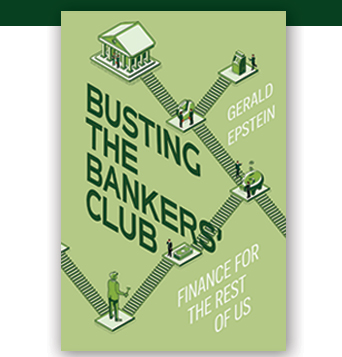
PERI researcher Gerald Epstein’s book Busting the Bankers’ Club: Finance for the Rest of Us uncovers the deep roots of Wall Street’s political and economic power. The book describes how, due to the long-term erosion of regulatory policies, current U.S. financial practices promote instability and crises and produce destructive impacts on workers and communities. Epstein also examines in depth the “Club Busters.” These are the political activists, organizations, financial regulators, legal scholars, economists, and policymakers who are fighting the destructive power of finance and aiming to build a financial system that serves the rest of us.
Marx on Credit, Financial Crises, and Industrial Cycles
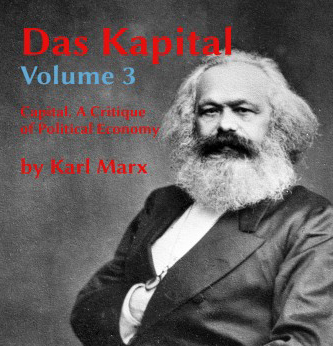
This paper by Henrique de Abreu Grazziotin presents Marx’s theory of the industrial cycles, creating a synthesis and organizing his approach to this topic, which is fragmented throughout Part 5 of Capital Volume III. Marx's theory of the industrial cycles explains why and how the credit system periodically drives capitalist production to endogenous business cycles that lead to crises of credit-driven overproduction and financial fragility. Grazziotin also presents Marx’s historical interpretation of the 1847 crisis in England, analyzing each phase of the cycle and associating it with Marx’s theoretical perspective.